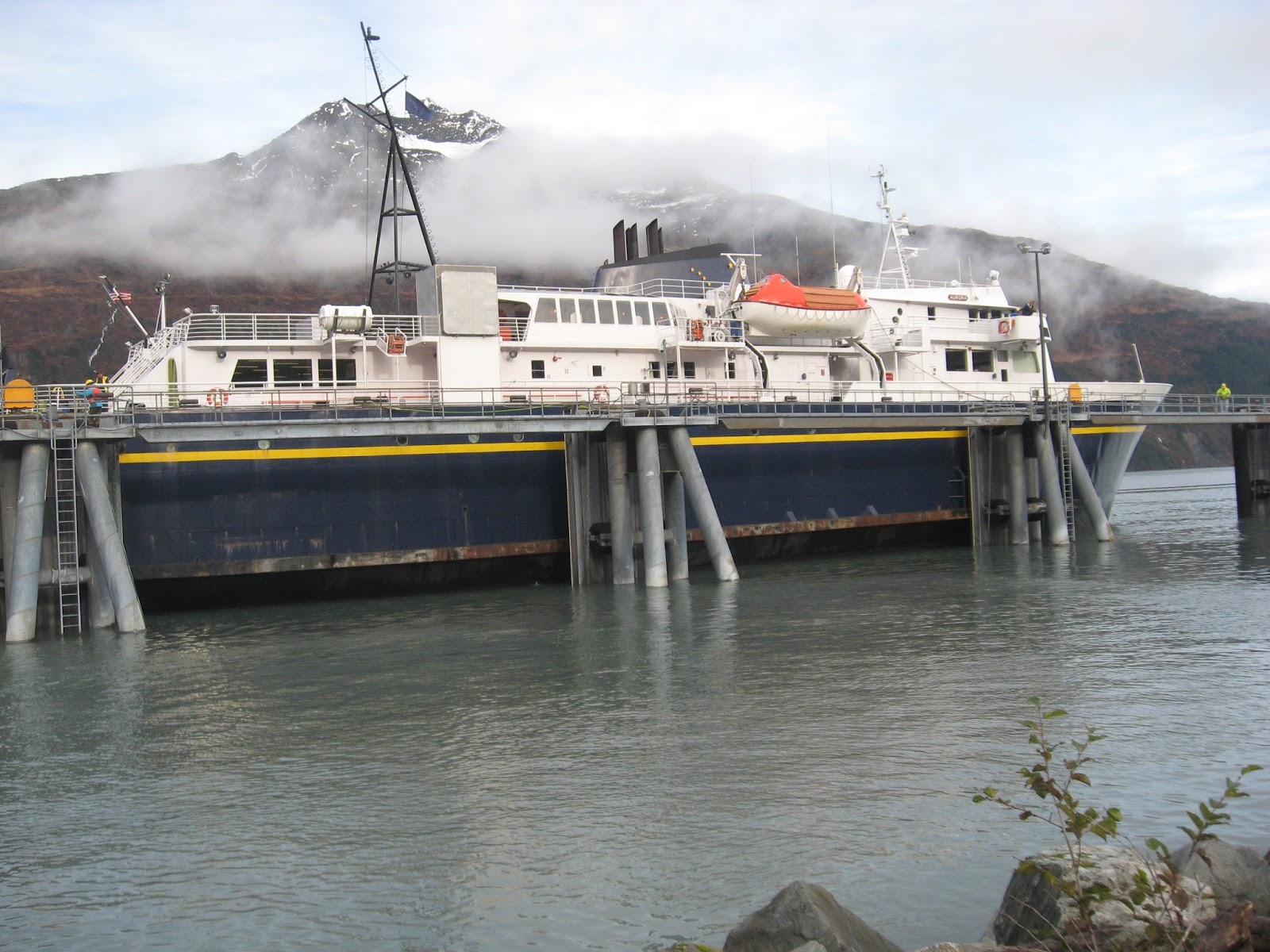
In centuries past, time aboard ship was
reckoned by hourglasses and chronometers.
For the crew’s information, the men on watch would ring a bell every
thirty minutes to announce the time. It
was a simple system. The day was divided
into six watches of four hours each, the duty times for the crewmen who kept
watch over the ship. The watches were
scheduled from 12 to 4, 4 to 8, and 8 to 12, am and pm. The first striking of the bell on a particular
watch would take place at, say, 8:30am.
This would be a single strike, or “one bell.” At 9:00am there would be two strikes on the
bell, or “two bells.” At 9:30am, three
bells. And so on up to eight bells, at
which time the watch ended and a new watch began. In the parlance of seamen the phrase “eight
bells,” which originally meant the end of a watch, came to mean the end of other
things as well, for example, the end of a voyage, the end of a career, and most significantly, the end of a
life. Obituaries of merchant seamen in
trade journals thus appear under the heading “Eight Bells.”
I recently learned of the deaths of several
former shipmates. Some were expected;
others not. One in particular stands
out, that of a man I sailed with at the beginning and in the middle of my
career. He was a fine seaman, a good
shipmate, a great boss, and a mentor.
The Rigel
Captain Virgilio Rigobello was serving as
the chief mate of the freighter Rigel
when I joined the ship in Norfolk, Virginia, on Tuesday, May 15, 1979. Thirty years older than myself, he had been
born in Genova, Italy. Known
affectionately behind his back as the “Italian Stallion,” he stood 5 feet 4
inches tall, had a slender build, brown eyes, and jet black hair. He had attended the training school for the
Italian Merchant Marine, and besides his technical expertise was a very learned
and cultured man. For example, in
addition to his native Italian, he spoke English, French, and Spanish, and he
read Latin and some Greek. In his youth
he had sailed aboard Italian merchant ships. Aboard one of these he met an American
passenger who later became his wife. By
the time I met him, Captain Rigobello had become a naturalized American citizen
with an American Master’s license, a home in Brooklyn, and a son about my own
age. Aboard the Rigel as chief mate, he was addressed as “Mr. Rigobello” by all
except his long time friend and colleague, Captain Manuel Viera, the Master of
the Rigel. He called him “Alex.” The two men were about the same age, had
sailed together many times in many years, and shared an obviously strong bond
of friendship. Both had high moral
values and high professional standards and were officers and gentlemen in the
truest sense.
Mr. Rigobello’s duties aboard the Rigel involved the supervision of the
deck crew, the maintenance of the ship, conducting emergency drills, anchoring
and mooring, preparation of the payroll and other administrative work, and
assisting as needed on the bridge. This
was a day job, meaning that he did not stand a bridge watch, but the hours
varied with the ship’s operating schedule.
Cargo work, in particular the underway replenishment of military
vessels, was handled by a younger officer who was basically an assistant chief mate.
When the Rigel sailed from Norfolk on May 22, she carried a damage control
instructor from company headquarters with her.
All the way across the Atlantic this fellow trained the crew, many of
whom were new to the ship, in emergency procedures. As chief mate, Mr. Rigobello was heavily
involved in these training exercises, which could get hectic at times. As a neophyte third mate, this regimen was
all new to me. I learned quickly that
even though I now had a license, the older and more experienced men like
Captain Viera and Mr. Rigobello were
light years ahead of me. No doubt they
saw me as the novice that I was, but they were both very patient and
encouraging. During the summer months in
the Mediterranean, the Rigel made
numerous short voyages and delivered many tons of cargo to the Navy and other
customers. Routine work to the old
hands; all new and adventurous to me, as well as a tremendous learning
experience. I received many kind words
of encouragement, instruction, and occasionally, correction. It was a happy time.
On a few occasions I accompanied Mr.
Rigobello at his docking station on the bow.
He always expressed his pleasure at having me there, and interrupted his
own duties to explain things and answer questions. More typically, I was stationed on the bridge
during arrivals and departures. One such
arrival on Friday morning, August 17, was particularly noteworthy. It was the one time that summer that the Rigel went to Genova. When the ship was securely moored alongside
the pier, he returned to the bridge from the bow obviously elated, whereupon
James James, the second mate, announced to everyone that we had now come to Mr.
Rigobello’s home town. The ship did not
remain in Genova long, however. She
sailed again in the late afternoon, but her conscientious chief mate was able
to go ashore and visit home for a little while at least.
On an earlier occasion, a group of us had
gone ashore together for a longer excursion.
This was unusual. Conflicting work hours and differences in age and
interests combined to make group outings the exception and not the norm. But on June 3, a Sunday afternoon when the Rigel was docked in Malaga, Spain,
several of us rode the trains inland to Grenada. The purpose of this journey was to visit the
famous Al Hombre Castle built during the Moorish period of Spanish
history. Mr. Rigobello and the damage
control instructor were the oldest men in the group, and while they naturally gravitated
together, there was no sense of segregation.
Everyone had a pleasant time sightseeing, conversing, and dining
together.
At one point in early August I started
having severe pains in my lower back.
When the Rigel next docked in
Napoli, it was arranged for me to meet with an American military
physician. To my dismay, this young man
was unable to help me, and frankly, he spent more time joking with his
colleagues than tending to his patients. Back on the ship, though, Mr. Rigobello
offered a simple solution. He directed
the carpenter to cut a piece of lumber and place it under my mattress. After a sound night’s sleep on this board, my
back pain went away as quickly as it had come on. I certainly appreciated this remedy. For their part, both Mr. Rigobello and
Captain Viera expressed great satisfaction that the cure had worked. No doubt these men in their fifties thought that
I was much too young for back problems!
After sailing transatlantic again, the Rigel returned to Norfolk on Wednesday,
August 29. She was scheduled next to
undergo a shipyard overhaul, and many of the crew were to be discharged before
this started. Captain Viera gave me this
news somewhat apologetically, and both he and Mr. Rigobello wished me well in
my future career. I left the ship that
evening and returned home by air. After
thirteen days of vacation, I left home again for my new assignment aboard the General Hoyt S. Vandenberg. For a time, then, the memory of my
experiences aboard the Rigel faded
into the background.
The Waccamaw
My next meeting with Captain Rigobello took
place in Augusta, Sicily, on Thursday, June 24, 1982, the day I joined the
tanker Waccamaw as third mate. He was then the Master of the Rigel, which was docked across the pier
from the Waccamaw. In the three-years-long interval since we had
last seen each other, I had sailed on four other ships, upgraded my license to
second mate, gotten married, and bought a house. I did not think of this at the time, but in
retrospect I suppose Captain Rigobello must have seen a difference in me. He came over to the Waccamaw to visit his counterpart, Captain Aspiotis, and he greeted
me warmly and enthusiastically. And I
was very happy to see him again, too. We
had a happy reunion and a pleasant conversation, and then it was time to
go. Late that afternoon, the two ships
parted company and sailed away in opposite directions. I did not know when or if we would meet
again.
Two months later in Rota, Spain, we met
again. The Waccamaw docked there on Friday, August 27, and that afternoon
Captain Rigobello returned to work from a short vacation and relieved Captain
Aspiotis, who then left for his vacation.
Also in Rota then was the new freighter Sirius with Captain Viera in command. He, too, greeted me warmly and
enthusiastically, expressed great satisfaction with my new second mate’s
license, and wished me well in the further advancement of my career. Following this brief reunion, the Sirius departed over the weekend. Then
on Monday the 30th the Waccamaw
set sail initially for Mayport, Florida.
Halfway across the Atlantic, this destination was changed to Norfolk,
Virginia, where she arrived on Friday, September 10.
I thoroughly enjoyed sailing
transatlantic with Captain Rigobello in command of the Waccamaw, but with a new second mate’s license, I naturally wanted
to sail as second mate. Soon after the Waccamaw arrived in Norfolk, I mentioned
this to the Captain and asked him if he would mind if I called our company headquarters
in Bayonne, New Jersey, to inquire about getting a second’s job aboard another
ship. His reply surprised me: “Well,
you may certainly call the base if you like, but I think if you stay here you
will find that everything will work out well for you.” Somewhat startled but catching his drift, I
did not call the base. I stayed on the Waccamaw as third mate, made a few short
voyages in and out of Norfolk, and then became second mate on Wednesday,
September 29, when the previous second went home.
For the rest of the year, the Waccamaw made voyages from Norfolk to
the Caribbean and to operating areas in the Western Atlantic. Most of these were routine, supplying
petroleum to Navy ships at sea and making port calls in Roosevelt Roads, Puerto
Rico, and Guantanamo Bay, Cuba. I grew
into my new position as second mate on these journeys, and Captain Rigobello
reposed increasing amounts of trust in me.
Before very long, he was letting me bring the Waccamaw alongside aircraft carriers unsupervised at 5:00 and 6:00am
while he was still in his cabin. He
would then typically arrive on the bridge shortly before the underway
replenishment started.
In less dramatic moments, Captain
Rigobello often took the opportunity to teach.
With the ship and the sea as his classroom, he would explain things that
were in front of us in a professorial way.
The topics covered included recording weather and sea state
observations, using the ship’s twin propellers in maneuvering, techniques for
celestial navigation, and so on. He
taught me a lot, and I felt privileged to learn from such an experienced and
knowledgeable shipmaster.
On occasion serious events took
place. Once the Waccamaw was called upon to carry out the medical evacuation of a
man on a sailboat. This took place in
mid-November in a moderately rough sea.
We picked up the patient on Saturday the 13th, and delivered
him to Bermuda the next day. The nervous
strain of this operation showed on Captain Rigobello, as did great relief when
we received word from Bermuda that the man’s life was saved.[1]
Another time we lost the plant, that is,
the fires in the boilers went out because of water leaking into a fuel
line. While this was mostly a problem
for the engineers, some critical navigational equipment, like the gyrocompasses,
had to be restarted and brought up to speed again. These vintage gyros came under my
jurisdiction. As I struggled with and
sweated from both stress and heat in the gyro room, I felt the burden suddenly
become lighter when the Captain arrived and offered pointers on getting these
tired old machines going again. He knew
his stuff, and it showed. I was very
happy to have him share his expertise with me.
One morning a situation of the utmost
seriousness arose. At about 6:00am on my
watch, the Waccamaw was proceeding at
very slow speed on a northeasterly heading in the Western Atlantic not far from
the Caribbean, when a squadron of a half-dozen Navy ships came along at high
speed from the northwest. I plotted them
on the radar and had them in sight, and I determined that they were approaching
me on my port bow at an angle of about 75 degrees and that they would pass
ahead of me at extremely close range if they held their course. In this situation, the Waccamaw had the right of way.
I was required by international law to hold my course, and the Navy
ships were required by the same authority to alter their course and go around
the Waccamaw.
Well, they did not do this. As I was considering what action to take,
someone from one of the Navy ships called me up on the bridge-to-bridge
radio. When I answered, he identified
himself and told me, “We are taking your ship under tactical control. We order you to increase speed and make an
immediate right turn and join our formation.”
And then he stated the formation’s course and speed.
I was astonished! Who did this guy think he was? Immediately, I recognized that this guy was
not my boss. I took my orders from
Captain Rigobello, not some anonymous voice on a Navy ship that did not comply
with the Rules of the Road. More
importantly, though, I could see that if I made the course and speed changes
that he ordered, I would be cutting in front of these Navy ships and exposing
the port side of a tanker containing 30,000 tons of oil to their bows. A collision would be inevitable. Did this guy really expect me to do
that? It would be criminal! Seeing that the Navy in this situation had
no evident intention of sailing by the rules, I responded, “Negative! In order to avoid a collision with your ship,
I am turning left at this time.” And I
gave the order of “hard left” to the helmsman.
From the other ship I received a terse “Roger, out.” The Waccamaw
responded slowly but surely to her helm.
She and the Navy passed starboard to starboard. When these other ships were safely out of the
way, the Waccamaw resumed her
original course. I continued with my
duties until the third mate relieved me at 8:00am.
When I arrived at the breakfast table a few
minutes later, Captain Rigobello and Lieutenant Johnson, the naval liaison
officer assigned to the Waccamaw,
were having a serious discussion. The
Captain was quite calm; the Lieutenant appeared very agitated. As I sat down, Captain Rigobello said, “Well,
let’s hear his side of the story.” I
gathered that the Navy had complained to Lieutenant Johnson, and he in turn
went to the Captain, and he in turn was now asking me what happened. So I told him. He listened patiently, asked a few questions,
and then said, “Very well. You did the
right thing.” Then Captain
Rigobello instructed the Lieutenant,
“You get on the radio and tell your Admiral to simmer down. My second mate did his job and avoided a
collision. I’ll stand by him.” With a horrified look on his face the Lieutenant
rushed from the table, and the matter was concluded.[2]
This incident was unique,
fortunately. Nothing like it happened
again, for which I was grateful. I was
also very grateful to have a boss who would back me up in a tense situation. For that matter, he backed me on other
occasions in domestic disturbances, once when an engineer threatened to kill me
because I wouldn’t help him sneak liquor on board, and once when another
engineer reached for a fire axe and threatened to dismember me.[3]
Most of the time, though, life on the Waccamaw was reasonably peaceful. And sooner or later everyone, myself
included, received a glance or a word of disapproval from the Captain. I recall one such occasion after our first
transit from Roosevelt Roads to Guantanamo Bay.
We had not changed the clocks during the night, and on arrival the
shipboard time was an hour different from the Cuban time. None of us had even realized that we were
crossing a time zone boundary. As the
second mate, though, this matter came under my jurisdiction, and I should have
thought of it. Anyway, when we realized
the error once we’d arrived in Cuba, someone suggested looking in the Nautical Almanac for the local time zone
differences. I suppose I had once known that
I could look up this information there, but I didn’t then. With a surprised and disappointed look,
Captain Rigobello turned to me and asked, “You did not know that?” I was too embarrassed to answer. He seemed to sense that, and he turned away. I felt so dismayed that I had merited his
disapproval. It passed, though, and life
went on.
More serious was the night the Waccamaw went aground in Guantanamo Bay.
The ship had docked there in the morning
of Wednesday, December 1. She was
scheduled to depart the next day at 2:30am, but this proved to be problematic
because the bow had become stuck in a mud bank, and the ship would not
budge. Captain Rigobello was not happy
about this. It took the herculean
efforts of two Navy tugboats, both engines going full astern, and the pumping
out of all the water in the forepeak tank to dislodge the ship. It was a long and trying night, but it ended
well, and there was no damage to the hull.
The Waccamaw
sailed south that Thursday, refueled the aircraft carrier Dwight D. Eisenhower, and returned to Guantanamo Bay without
incident. Arriving at 6:00pm, the Waccamaw did not return to the pier, but
anchored instead. Forgoing the customary
practice of taking on a Navy harbor pilot, Captain Rigobello brought the ship
in himself. Earlier in the day, he and I
had studied the harbor charts together. Memorizing
the key features, we worked out the approach and selected the best place to
anchor. Working together as peers—that
was how it felt at the time. Afterwards
I realized that he was doing more than planning his arrival; he was teaching me
as well. Leaving again just after
midnight on Saturday, December 4, the ship continued her work with the fleet uneventfully and then headed
north.
With the Waccamaw back in Norfolk from the Caribbean in the first week of
January of 1983, Captain Rigobello went on vacation. He stayed home until the middle of
March. In his absence, Captain Derric
Linardich took over the ship, and she continued her voyages to the Caribbean
and nearby areas. When it became time
for the Waccamaw to begin her
shipyard overhaul, Captain Rigobello returned to the ship, resuming command on Tuesday,
March 15.
The
Shipyard
Several shipyards had bid on overhauling
the Waccamaw, and the contract was
awarded to the Old Dominion Metro Machine Company in Norfolk. Situated just across the Elizabeth River from
downtown, it was a convenient location.
For a large part of the overhaul time, the ship would be completely shut
down and a small caretaker crew housed ashore.
I took a room at the Holiday Inn in downtown Norfolk, which was an easy
walk to the shipyard. Several others
stayed there, too. Captain Rigobello and
the engineering specialists from company headquarters opted to stay at the
Marjack Motel in Virginia Beach. This
was several miles away, but they had a company car.
The overhaul included tank cleaning,
drydocking, sandblasting, repainting, cutting, welding, pipefitting, electrical
repairs, and so on. The Captain’s work
during this time was largely administrative—paperwork, meetings, telephone
calls, inspections, etc. He worked on
the ship during the daytime; I was there usually at night. Often on the weekends he went home to
Brooklyn. He remarked once that he
enjoyed flying between Norfolk and New York and looking down on the tops of the
clouds.
One thing which Captain Rigobello did not
like was dirt. Ships undergoing yard
work invariably became dirty, and the Waccamaw
was no exception. Hoses, wires, boxes,
crates, tools, and sand lay strewn all over the decks and got in everyone’s
way. The gangway watch tried to keep a lid
on things in this heavy traffic area, but the mess, especially the sandblasting
debris, always won the battle. One
morning when everything had become particularly filthy, the Captain came up the
gangway, looked around briefly, heaved a big sigh, and exclaimed, “This ship is
a mess!” Turning toward me, he asserted,
“We have got to do something about this.”
I felt bad for him.
But things got better. On Memorial Day the Waccamaw was refloated. In
the following weeks the shipyard work started winding down. New crewmen arrived, and on Wednesday, June
22, the ship went out for sea trials.
All the machinery was put through its paces, and everything passed the
test. Next the Waccamaw would load oil and stores, undergo crew training, and
prepare to return to the Mediterranean.
This was a very busy and hectic time that put a strain on everyone.
What
Manner of Man?
Because of my prior experience with
Captain Rigobello when he was chief mate on the Rigel, I looked forward to sailing with him again aboard the Waccamaw. We had received word a week or so in advance
that he would relieve Captain Aspiotis in Rota.
Among the crew, the troublemakers who knew him dreaded his arrival. The chief mate at the time, a crusty New
Englander named Jonathan Doane, predicted that some of the guys would come to a
rude awakening, because, as he expressed it, “You know Captain Rigobello. He’s got that hard headed European attitude.” This was true, up to a point.
Captain Rigobello was formal and
businesslike, but also pleasant and friendly.
The day I met him on the Rigel, he smiled, walked over to me, shook my hand,
and welcomed me aboard the ship. I later
saw that such cordiality with others was characteristic of him. He was formal in that he addressed all the
officers as Mr. with their surnames and never used first names. He also insisted on maintaining some social
distance between the licensed officers and the unlicensed crew. This was not snobbishness. He simply recognized, more than most
Americans did, the differences in responsibility, education, and expectations
that exist between the two levels of shipboard society. Aboard the Rigel he repeatedly told a cadet not to fraternize ashore with the
deckhands. This counsel went unheeded
until one night in Napoli when an unexpected visit to a brothel ended badly.
Then the boy learned. But as both chief
mate and Master Captain Rigobello treated the crew very well, and overall he
was liked and respected by them. I can
recall only one person—an officer, too—who openly disliked him, but for reasons
which I thought were ridiculous.
One thing that as Master he was very
particular about was food. He insisted
that everyone on the ship to be served good food. This became clear on a few occasions on the Waccamaw. One day at breakfast he looked at my French
toast and asked what was wrong with it.
I was going to eat it without saying anything, but since he asked me, I
replied that it was made with rye bread.
Hearing this, the Captain got up, went into the galley, and had a word
with the steward. When he returned to
his seat he remarked, “That takes care of that.” A minute or two later, a plate of proper
French toast arrived.
That was a small point, though. One evening at dinner there was cauliflower. The chief mate and the first assistant
engineer both ate this with great gusto.
Suddenly the engineer spit out a mouthful of it onto his plate and
watched as a worm crawled out of it. The
mate watched in horror. The two men
looked at each other. Then the mate
jumped up, ran out on deck, and threw up his entire dinner over the side. Those of us who did not like cauliflower
found this quite amusing. But once
again, Captain Rigobello got up and went to speak with the steward. On returning to the table he said, “Well,
that is not going to happen again.” And
it didn’t.
Finally it was the Captain’s turn. One evening when he selected his dinner from
the menu, it arrived not cooked properly.
Sending it back, he chose another entre instead. When this came to the table, it, too, was
unsatisfactory. Clearly irritated at
this point, he sent the second meal back and chose the third option
threatening, “If I send this one back, I send for a new cook, too!” It took a few minutes, but when the third
dinner was brought out, it was done perfectly.
For all the fastidiousness concerning the
food, meal times were always very pleasant and sometimes quite convivial. For a while we had a third mate who enjoyed
making a celebration out of everyone’s birthday. This was David Muir, from Massachusetts. On Captain Rigobello’s birthday, he arranged
for the steward to bring out a specially made cake after dinner. The steward and the messmen and utilitymen
paraded with the cake into the chow hall, and everyone sang “Happy Birthday”
and applauded the Captain on his big day.
He received these felicitations graciously and laughingly, and I think
with a little embarrassment as well. Without
asking, he know exactly who lay behind this unexpected little party, and he
good naturedly turned the joke on “my young friend Mr. Muir!”
David Muir stood the 8 to 12 watch, and
he took it upon himself to get a cup of coffee for Captain Rigobello and leave
it just outside his door early every morning.
This way the Captain could simply open his door a crack, pick up the
coffee, and drink it as he washed and dressed.
He laughingly told his “young friend Mr. Muir” once, “I appreciate the
cup of coffee first thing in the morning, but you know, you really don’t have
to do this. If you want to, that’s fine,
but don’t feel that you have to.” The
coffee service continued, and both parties were happy. There was no element of currying favor in
this. It was simply a gesture of
thoughtfulness toward a good boss.
Besides birthdays and morning coffee, the
main source of conviviality was the movies.
These were shown after dinner, in the combined chow hall and lounge on
the Rigel, and in a separate lounge
on the Waccamaw. Most of the mates and engineers not on watch
went to the movies. Captain Rigobello
always did. Most of these films were
light-hearted entertainment; a few were serious historical or cultural
works. One particularly ludicrous movie
contained a scene in which a well dressed businessman became so overwhelmed by
job stress at a board meeting that his head exploded. Blood, brains, bone, and hair scattered
everywhere. It was disgusting, and
comically ridiculous.
A few days later, this became an object
lesson. Captain Rigobello came up to the
bridge at the change of the watch, and he reminded us of something that needed
to be done and must not be forgotten.
Referring good naturedly to this movie he chided gently, “Come on now,
you young men. If I have to think of
everything, my head is going to explode!”
We all laughed, but he made his point.
Another time when the Waccamaw was docked in Norfolk a serious
matter arose which could not be corrected in a joking manner. One evening a deck seaman was returning to
the ship, and he was stopped and searched by the Marines at the entrance to the
Norfolk Naval Base. The Marines found
marijuana on him. They did not arrest
him, though. Instead, they escorted him
to the ship and reported their find to the mate on watch. Word of this violation was reported to
Captain Rigobello, who had to decide what to do about this man. Word spread among the crew as well, and the
general expectation was that he would be fired.
It was too bad. He was a very
intelligent, very industrious, university educated young man with a bright
future. He was on my watch at sea. I liked him and was friendly with him and
would miss him.
The next evening when the ship was quiet
and most of the crew had gone ashore, Captain Rigobello called the culprit into
his office for a private consultation. I
was on duty at the time, and I naturally wondered what would happen. I did not need to wait long to find out. A few hours after the meeting this young man
sought me out, and he told me what transpired.
Captain Rigobello brought him into the
office, shut the door, and then bawled him out:
“What’s wrong with you? Why did
you do this? What were you
thinking?” A long tirade followed. The gist of it was that this man was one of
the smartest and best educated people on the ship, that he knew better than to
do drugs, that many in the crew looked up to him, that he was an example for them,
that everyone had high expectations of him, that he had let us all down, and so
on. The Captain continued to the effect
that he could not afford to lose a good worker and that this young man was
officer material and should start studying for a license. Finally, he asked him, “Now, what do you have
to say for yourself?”
The young seaman replied, “Well, Captain,
you’re right.”
Startled, Captain Rigobello sighed, sat
down, and asked, “What do you mean, I’m right?”
The young man explained, “I mean that
you’re right. I was wrong. I did know better. I don’t know why I did it. I don’t know what I was thinking. I shouldn’t have done it, and I will never do
it again. I was wrong, and you’re right. That’s what I mean."
Some quiet discussion followed. Then Captain Rigobello finished up with, “All
right, then. We will say no more about
this. Go out now and do your work and
stay out of trouble. This must never
happen again, or next time I will need to do something.”
And that was it. This fellow did his work very well and never
got in trouble again. Captain Rigobello
had recognized his intelligence, his work habits, and his potential, and
administered justice with mercy. In
return, this young man felt deeply appreciative toward the Captain and came to
consider him a great man.
Captain Rigobello always seemed happy to
recognize intelligence and capability in others. Aboard both the Rigel and the Waccamaw, he
liked sailing with young mates who strove to excel in their work, upgrade their
licenses, and advance in their careers.
He consistently encouraged them, and he placed large degrees of trust in
them. With his exacting standards he
called upon everyone to do the best job possible, and he required complete
accuracy and professionalism in navigation, shiphandling, helmsmanship, and
emergency drills. He often said, “Let us
be professional.” In this he did not
come across as a demanding boss, but more as an inspirational leader who
brought out the best in his subordinates.
I believe that all the young mates who sailed with him genuinely wanted
to please him.
This does not mean that Captain Rigobello
was never unhappy, though. I do recall
him being cross with people on a few occasions on both the Rigel and the Waccamaw. Typically this was brought on by outside
factors that generated stress and aggravation.
Too much shipyard mess, too much military madness, too much crew
misbehavior, too much legitimate worry, as with the medical evacuation—these
were the things that caused irritation and annoyance to show, although in all
fairness, it was always mild. Besides, when
he was the Master he bore the ultimate responsibility for everything on the
ship. If anyone had the right to be
cross in tense times, it was he. I’ve
sailed with Masters who threw violent temper tantrums over petty matters, but
Captain Rigobello never behaved like that.
Sometimes the Captain just wanted someone
to talk to. I remember a couple of times
when he sought me out. In March, when he
returned to the Waccamaw after his
vacation, he came to me one evening and asked in considerable detail how things
had gone on the ship in his absence.
Another time, when he was returning from a visit home on a Sunday
evening, he came up to the chartroom where I was working and struck up a
conversation. This one was purely
social. He never discussed his home life
much, but this time he volunteered several personal items. He told me about his son—“He is young, and he
likes to go out”—and how he did not drive the family car in New York—“Oh, I
know how to drive, but my wife is more used to it than I am”—and while he liked
to see his family he also liked his work—“I love to sail.” I was happy that this great man would want to
talk with me; perhaps he remembered the times on the Rigel when I had approached him and sought his counsel.
Captain Rigobello always spoke
Italian-accented but completely fluent English with us. For a while, though, we had another Italian
on the Waccamaw, a deck seaman named
Mariano Zucchi. He came from Trieste,
had an Italian second mate’s license, and had also married an American. Before granting him an American license, the
Coast Guard required him to sail in an unlicensed capacity for one year aboard
American ships. During one quiet time on
the bridge Captain Rigobello initiated a conversation with Mariano in Italian. I listened quietly. They both spoke the cultivated northern
Italian of the educated classes. With my background in French and Latin and
with the Italian I had picked up in Europe, I found that I could understand
about 90% of what they said. Later, I
translated the bulk of their conversation for Mariano as a joke. He was astonished! I never mentioned this to the Captain,
though, nor did I ever tell him that my wife was from Germany. In retrospect, I daresay he would have been
more interested than I thought at the time.
Farewell
After a year and more on the Waccamaw, I was starting to wear out. I needed a vacation. A largely new crew was joining the vessel
after the shipyard overhaul, and soon they would take her across the Atlantic
and back into the Mediterranean. As much
as I wanted to make this great voyage and return to Europe, I realized that I
had been running on full ahead for too long, and I needed a break from it. Most of the others with whom I had worked and
been friendly had already left. With
mixed feelings, then, I requested relief to go home on vacation.
Captain Rigobello seemed
disappointed: “So, you are going on
leave?” I explained how I felt, but also
expressed my willingness to rejoin the ship later on, and he replied that that
would be fine with him. He agreed that I
needed some rest.
It took time for the paperwork to meander
its way through the system in the company offices, but eventually we received
notice that my relief was on his way.
When he didn’t show up, I thought that maybe I would sail back to Europe
after all, which was not really such a bad prospect. But then he arrived on Thursday, July
21. I had the evening watch and spent
most of the time showing him around the ship.
Late the following afternoon I left the vessel and travelled by air to
New York.
I remember well and with some emotion my
departure from the Waccamaw. There were several fellows clustered around
the gangway when I came along with my suitcase and sextant box. Everyone wished me well, but Captain Rigobello
did most of the talking, and he did something that he had never done
previously. Shedding his standard
formality, he shook my hand, patted me affectionately on the shoulder, and
addressed me as “David.” He wished me
well, told me to get some rest, and said that he hoped to see me again and with
a chief mate’s license. He paused
briefly. Then he looked me in the eye
and said, “You are one of the best, if not the best.” I was stunned, and also a bit embarrassed by
this public accolade, but I managed to stammer out a thank you. In that same instant I wished I weren’t
leaving. I suddenly wanted to stay on
board and sail back to Europe with him!
But it was time, and I had to go.
I don’t remember the ride to the Norfolk
Airport, and I scarcely remember the flight to New York, except for changing
aircraft in Baltimore. Captain Rigobello’s
words reverberated in my head. Even now,
over thirty years later, I can still see him standing there, can still hear him
saying that, and can still feel him patting me on the shoulder.
To my great regret, I never saw Captain
Rigobello again. I never rejoined the Waccamaw. I returned to Europe later in the year, but
aboard the Comet. He went his way, and I went mine. That’s how it was in the Merchant
Marine. I did communicate with him
through an intermediary at one point, though.
A few years later, in 1986, I was in the
company headquarters in Bayonne. By
chance I ran into Mr. Zahartas, one of the electronics experts who had been
involved with the Waccamaw’s shipyard
overhaul. He had had his work cut out
for him then, with new radar installations, a new autopilot, new gyrocompasses,
and so on. When I met him again in
Bayonne, he was about to return to Norfolk to work on another ship, and he
would see Captain Rigobello again. I
asked him if he would bring a message for me, and he agreed. I asked him to convey my greetings to the
Captain, and also news of my new assignment.
Then I requested that he please tell the Captain that I would like very
much to sail with him again. When he had
an opening, I would be happy to fill it.
A few weeks later I saw Mr. Zahartas
again, after he had returned from Norfolk.
He told me that he had delivered my message. Then he told me that Captain Rigobello was
quite touched and even moved by it. This
surprised me. Seeing my reaction, Mr.
Zahartas exclaimed, “You know, that’s a big compliment you paid him. Not everybody wants to sail with him. You know what he’s like. A lot of these guys don’t want to work that
hard.” I had to concede his point.
Mixed feelings. After the Waccamaw,
I enjoyed sailing aboard the Comet
and the Bartlett. They were good experiences, and I took the
exams and upgraded my license to chief mate and limited Master in between these
assignments in 1984. This would no doubt have pleased Captain Rigobello very
much. But I regretted not sailing with the
“Italian Stallion” again.
In my working years I’ve had good bosses
and bad bosses, excellent bosses and terrible bosses. I am now older than Captain Rigobello was
when I knew him. With the twenty-twenty hindsight
that comes with age, I see now that he was “one of the best, if not the
best.” Actually, he was “the best.” I have thought of him often over the years
and wondered what became of him. I
learned of his death only recently.
My thoughts echo, with one slight change,
the famous prayer offered by Cardinal Cushing many years ago:
May the angels, dear Captain, lead you into
Paradise![4]
Eight
Bells
In Memoriam
Virgilio A. Rigobello
November 8, 1927—December 21, 2008
His wife
Marie V. Rigobello
January 9, 1923—September 15, 1994
In pace requiescant.
[1] This event is described
more fully in my essay “Rescue at Sea.”
[2] I have since learned
that the Waccamaw was involved in
four collisions at sea before I joined her, and I remain very happy that a
fifth collision was in this instance avoided.
See https://en.wikipedia.org/USS_Waccamaw_(AO-109).
[3] These events are
described more fully in my essays “The Wicky
Wacky” and “The Screamer.”
[4] Based on Richard
Cardinal Cushing’s spontaneous prayer in English during the Requiem Mass in
Latin for President John F. Kennedy, Saint Matthew’s Cathedral, Washington, DC,
November 25, 1963. The Cardinal said
“dear Jack.”