Sunday, October 6, 2019

Sunflowers


One day this past summer a pot full of sunflowers mysteriously appeared on our porch.  I never learned who put them there or why, but their big, bright, and cheerful yellow blooms caught my attention, and I took to watering them regularly because they were so pretty.  They also reminded me of a family visit on Long Island that took place about five years ago.

Normally, I prefer not to travel on Sunday.  Sometimes, however, exceptions to this policy become necessary, and because they are exceptions, they are also memorable occasions.  On this particular occasion, Miss Patty and I were traveling to Long Island on Sunday because on Monday she would depart from Kennedy Airport and fly to Brazil for our daughter’s wedding.  And so in the afternoon of July 20, 2014, we drove to New London, Connecticut, and then sailed to Orient Point, Long Island, aboard the ferry Cape Henlopen.  The weather on the water was so beautiful and the crossing was so tranquil and sublime that it seemed, if not actually sinful, at least morally deficient to not be at sea that Sunday.  As always, though, the voyage ended too quickly, and we drove off the ship and continued westward.

Diverting this time from our usual route through the built-up North Fork villages from Greenport to Riverhead, we followed Route 25A, a secondary road through the farmlands of Eastern Long Island instead.  It was a pleasant diversion through less traffic and more open country, a restful alternative fitting for a day of rest.  Along the way we passed several roadside farm stands open for business, and as we neared Wading River, we came upon a roadside floral vender selling sunflowers.

For many years, I’ve been in the habit of bringing flowers to my Mom when returning home for a visit.  Usually, I picked these up at the Petal Pusher in Penn Station or at Howard’s in Mineola.  Today, however, while taking a more bucolic route, an opportunity arose to get her a bouquet made up entirely of locally grown sunflowers.  Mom would love these, we figured, with their bright yellow petals, dark brown centers, and green leaves and stems.  Uniform but not identical, all these sunflowers would be strikingly different from a customary commercial bouquet produced by a florist.

When we arrived at the family headquarters about 6:00pm, Mom liked the sunflowers very much.  Following her usual custom, she placed them in a vase with fresh water and put them on display in the living room.  Several times she remarked on the brightness and cheerfulness of their colors and added that these ranked among her favorite flowers.  In the days that followed, she enjoyed the sunflowers very, very much.

Also in the following days, Miss Patty left for Brazil, and I had a pleasant visit with my parents.  On Thursday, July 24, I took an afternoon train to Boston and then the bus back to Nashua.  Our car remained on Long Island pending Miss Patty’s return from the wedding.

In the following years, I’ve come to associate sunflowers with my Mom.  Aptly named, they have a sunny disposition that resembles hers.  Scientifically known as Helianthus, their simple beauty and bright colors create a cheerful atmosphere wherever they are displayed.  How fitting, then, that they should remind me a of someone who appreciated the beauty of the world and who saw this beauty as the gift of a Creator-God to his human children.

One part of the world whose beauty Mom especially enjoyed and appreciated was the seashore, where the land and the sea intermingle.  During her childhood, she spent summer vacations with her parents and extended family at the seaside on both the North Shore and the South Shore of Long Island.  Later, she continued to visit the seashore with college friends, and after that, with her own family.  Over a lifetime, she became acquainted with Long Beach, Lido Beach, Point Lookout, Tobay Beach, Jones Beach, Cedar Island, Oak Beach, Oak Island, Captree, Fire Island, Massapequa, Lindenhurst, Babylon, Montauk Point, Orient Point, Mount Sinai, Port Washington, and the Long Island Sound ferries.  In addition, she sailed the family sailboat on the Great South Bay for many years, and she made one ocean voyage to Bermuda and the Bahamas aboard the Evangeline as a young adult.  During her last years, with restrictions on her mobility, Mom could well have echoed the words of the great seaman and poet John Masefield:

A wind’s in the heart of me, a fire’s in my heels,
I am tired of brick and stone and rumbling wagon-wheels;
I hunger for the sea’s edge, the limits of the land,
Where the wild old Atlantic is shouting on the sand.[1]

And so Mom and my father both took great pleasure in visiting the South Shore barrier beaches and voyaging aboard the Moon Chaser on the Great South Bay when I returned home to see them.

My parents still owned an automobile, so I drove them down to the oceanfront.  On these outings we followed the Ocean Parkway to our first stop at Oak Beach.  There, on a recently built fishing pier, we looked out at the Fire Island Inlet, watched the fishermen go about their business, and decided if we should cross the bridge to Fire Island itself or go to Captree for lunch.  Often we did both.  On Fire Island we admired the lighthouse, sometimes hiking out to it on the boardwalk through the sand dunes and beach grass.  At the beach, we spent a long time walking through the sand along the water’s edge and taking in the majestic view of the great Atlantic Ocean.  This was always a sight like no other, a temporary escape from the densely populated and heavily built-up urban area.  At Captree, we dined in the second floor Captree Cove Restaurant, and we enjoyed the views of the fishing boat docks, the adjacent waterways, and the distant lighthouse as much as we enjoyed the food.

On days when the Moon Chaser was sailing, we drove from the house directly to the Captree Boat Basin.  This vessel sailed on sedate sightseeing excursions in the afternoons, and my parents always sat on the upper deck in front of the pilothouse on these voyages.  From this vantage point, they had an unlimited view of everything on the water.  Leaving Captree at 1:00pm, the ship always proceeded eastward through the State Boat Channel to the open water of the Great South Bay.  Then, she sailed along the northern shoreline of Fire Island as far as the Fire Island Lighthouse.  Along this route she wended her way among fishing boats, sailboats, and the small trans-bay ferries that connected the communities of Fire Island with the Mainland.  There was always plenty of activity, and thus plenty of sights to see, on the bay.  Once abeam of the famed Fire Island Light, the Moon Chaser came about and slowly returned to Captree.  After disembarking around 3:00pm, we usually had an early dinner at the Captree Cove before heading back home.

Since my parents could no longer drive, they appreciated the opportunity to ride down to the barrier beaches and sail on the bay when I visited them.  As much as they both enjoyed these excursions, though, it was my Mom who always spoke admiringly and even reverently about the beauty of the seashore and the open ocean.  She saw the hand of God in everything there.  The innumerable grains of sand on the beach, the abundance and variety of life in and alongside the sea, the sun, moon, and clouds in the sky, and the seemingly limitless sea and sky stretching out to the horizon and far behind—all of these and more demonstrated the existence, genius, and perfection of God for her.  Mom never read this verse, but having studied Thomistic theology in college with the Ursuline nuns, she no doubt would have agreed with the scriptural assertion that:

all things denote there is a God; yea, even the earth and all things
that are upon the face of it. . .and also all the planets which move
in their regular form do witness that there is a Supreme Creator
(Alma 30:44).

Like many merchant seamen, Mom understood that there was much more to the sea than salt water.  She appreciated the spiritual aspect of the sea, and gazing upon it always involved an epiphany wherein the Supreme Creator manifested himself to her.

This did not happen only at the seashore, though.  Mom saw the hand of God in such diverse locations as the Pocono Mountains in Pennsylvania, the pine tree forests in Maine, the Botanical Gardens in Brooklyn, and the birds and squirrels in the trees of her own backyard.  She loved the world of Nature in all its forms, and she recognized it as a divine masterpiece.  Several times, when viewing the stars in the night sky, she asked rhetorically, “How can anyone look at all this and not believe in God?”  A poem she wrote captures this thought more artistically:

A precious orb that floats in space
Our Earth’s unique, a special place
Where living things together ride
An enormous carousel, and bide
In a friendly atmosphere
Of rich black loam and water clear,
Of sun and shade and rain and snow,
Miraculous ingredients to make us grow.

Dear Earth, some scientists proclaim
You were thrown from the sun, without aim
Or design, to become by destiny
This wondrous planet, this prodigy.
Are you just a freak in space
Or do you exist through divine grace,
A perfect setting for a priceless gem,
God’s image and likeness—men?[2]

Such was my Mom’s view of the sea, the world, and the cosmos.  They were all the work of the Supreme Creator, and she often expressed her gratitude for the majesty and beauty of his creation.

And so whenever I arrived back home with a bouquet of flowers, Mom saw them, too, as the work of God.  She always remarked on the beauty of their colors and then arranged them in a vase for display.  She always enjoyed these fresh flowers, and she especially enjoyed the fresh sunflowers that summer day five years ago.  No doubt she would have enjoyed the pot of sunflowers that mysteriously appeared on our porch this summer, too.

Now let’s look at some pictures!  First, in this vintage photograph from 1947, we seen my Mom on the right with the radio officer and a fellow passenger aboard the Evangeline of the Eastern Steamship Lines on a voyage from New York to Bermuda and the Bahamas and back.  The ship sailed from New York on Wednesday, July 30, and returned about a week or so later.


Next, we see my parents on the fishing dock at Captree on Thursday, June 25, 2009.  The buoys in the water behind them delineate the State Boat Channel, which leads eastward to the more open waters of the Great South Bay and the Fire Island Inlet.


Here, on her day off, the Moon Chaser reposes at her berth in the Captree Boat Basin on Thursday, 
September 19, 2013.

 
In this lovely view we see the Fire Island Light from the Moon Chaser on Thursday, August 26, 2010.


Finally, the million dollar view.  From the uncrowded, postseason, bathing beach on Fire Island on Thursday, September 19, 2013, we look at the great Atlantic Ocean.  A perfect place to contemplate the divine design of the world and the meaning and purpose of human life.


[1] John Masefield, “A Wanderer’s Song,” in Salt-Water Ballads, New York: The MacMillan Company, 1913, p. 61; reprinted by Bibliobazaar, n.p., n.d.
[2] Justine Elizabeth Burns, “The Earth,” unpublished poem, one of many in her personal papers.

Sunday, September 1, 2019

Escape Fiction


In order to withdraw temporarily from the responsibilities, tensions, and sometimes boredom of everyday life, many people turn to such therapeutic pursuits as light reading, soothing music, or simple daydreaming.  A typical bus or train on its afternoon commuter run is filled with people reading books, listening to music, and staring out the window.  My own withdrawal takes a somewhat different form, but it still works very effectively.

My son Michael often wears a tee shirt bearing the slogan, “Keep calm, and imagine a place.”  Taking this counsel to heart, I not only imagine but remember many places to which I’ve traveled, and in my mind’s eye, I see them again and enjoy the pleasant memories of them.  One spot in particular returns frequently to mind, and I imagine spending a day off from work there.

Located on the North Shore of Long Island, Port Jefferson is a busy and picturesque municipality at one end of a beautiful natural harbor.  Shops, restaurants, a hotel, a park, and the ferry terminal fill the downtown area.  When the ferries are in port, they dominate the skyline and command the town’s attention.  Far larger than everything ashore combined, these vessels, like great works of art, naturally turn the eyes of pedestrians to themselves and compel those passing by to stop and stare at them.  On a busy day these ships arrive and depart hourly.  I’ve watched them for brief periods on a few occasions, but I’ve often thought that I could easily spend an entire day watching them come and go.  Until this opportunity presents itself, however, the thought of such a pleasant day serves as my escape fiction, as temporary relief from “the prosaic severity of the daily task that gives bread.”[1]

On this imaginary day off, I take the first train to Port Jefferson and arrive at 8:00am.  The station sits a mile and a quarter inland from the waterfront, about 25 minutes’ walk, mostly through a quiet residential neighborhood.  Traveling light, I carry only a small shoulder bag containing my camera, notebook, and picnic lunch.  At the docks, I get comfortable on the wooden pier in front of Danford’s Hotel and Marina and fire up the digital camera.  The Grand Republic is entering Port Jefferson Harbor through the inlet from the sound, and this grand event must be recorded.

On the summer schedule, each one-way voyage across the sound lasts an hour and a quarter.  An arriving vessel docks in Port Jefferson at fifteen minutes before each hour, takes fifteen minutes to offload and backload passengers and vehicles, and then departs on the hour.  In the case of the now arriving Grand Republic, she docks at 8:45am, sails at 9:00am, arrives in Bridgeport at 10:15am, and sails again at 10:30am.  This predictable schedule is followed precisely by the three ferries on the route.  In three hours, then, three different ships arrive at and depart from Port Jefferson, and after that the cycle repeats itself.

The Grand Republic slows as she gracefully approaches the dock.  To further check her progress and ensure a smooth landing, her engines are momentarily reversed, and a churning propeller wash gathers around her stern.  Gently, she touches the dock and is made fast.   With her bow doors now open, the ramp is set in place, and disembarkation begins.  The pier now becomes a beehive of activity.  A steady stream of vehicular traffic spills out of the ship and onto the streets which bear it away.  Pedestrians trailing suitcases on wheels go ashore from the stern gangway and fan out toward waiting taxis and bus stops.  A few cross East Broadway and set out for the railroad station.

When the exodus is complete, the process reverses itself.  The lineup of cars waiting on the pier now snakes its way aboard the ship and disappears into the cavernous cargo bay.  Pedestrians hike up the gangway.  A few moments later passengers gather on the upper decks to soak up the sun and take in the view.  The loading is done quickly and efficiently.  At precisely 9:00am the Grand Republic blows her whistle and backs away from the dock.  Propeller wash again churns up around the stern and along the sides of the ship.  When well clear of the pier, she turns and backs down to starboard.  The engines are now put ahead to propel her forward and to port.  When this maneuver is complete, the Grand Republic settles onto a north-northwesterly heading and proceeds along the channel, through the inlet, and out to the open sound.  Another voyage to Connecticut begins.

Watching the Grand Republic from Danford’s pier, I record her arrival and departure movements with my camera, jot down some observations in my notebook, and review a few points in the company brochure.  Built in 2003 in Florida, the Grand Republic measures 300 feet long by 52 feet wide, carries 120 automobiles and 1,000 passengers, and is the second ship to bear this name.  Her fleet mates, the Park City, named for the City of Bridgeport, and the P.T. Barnum, named for the circus entrepreneur who was also the first president of the ferry line, date to 1986 and 1998, respectively.  The P.T. Barnum matches the Grand Republic in dimensions and capacity.  The Park City, however, is slightly smaller at 280 feet in length and 47 feet in beam with a capacity of 95 vehicles and 1,000 passengers.[2]

Looking up again, I see the Park City herself now coming through the inlet.  As she slows and enters the sheltered harbor, I begin a new series of photographs and record this second arrival, discharge, reload, and departure sequence of the day.  In the fifteen minutes allotted for the task, the exchange of passengers and vehicles is completed.  Then, starting at precisely 10:00am, the Park City blows her whistle, backs away from the pier, and maneuvers her way across the harbor and through the inlet, bound once more for Connecticut.

The Park City is followed soon afterwards by the P.T. Barnum.  This third arrival, cargo handling, and departure cycle runs as smoothly and efficiently as the first two, and at 11:00am the P.T. Barnum begins her return voyage to Connecticut.  With the three ships of the fleet now come and gone in under three hours in the bright summer sunshine and photographed on their port bows and starboard quarters, it’s been richly rewarding morning.  Now it’s time for lunch.

Retiring to the small waterfront park in front of Danford’s Hotel, I pause at the statue of the merchant seaman that gazes seaward.  Few such likenesses of merchant seamen exist, and that makes this one all the more special.  On the statue’s pedestal John Masefield’s famous lines are inscribed:

I must [go] down to the seas again, for the call of the running tide
Is a wild call and a clear call that may not be denied.[3]

It’s always refreshing to know that someone else feels the same way about the sea as I do!

From the park I cross over to the ferry terminal building.  Finding it surprisingly quiet inside, I take a seat by one of the large windows that face seaward and eat my lunch as the Grand Republic returns to port.  She repeats the same sequence of arrival, cargo handling, and departure of three hours ago.  While splurging on chocolate ice cream for dessert, I make some notes in my book and photograph this grand ship from her starboard side, a different perspective from earlier today.  Then, with a noon blast on her whistle, she heads out once more for Connecticut.

I head out, too, for the nearby wooden dock of the Port Jefferson Marina, just to the west of the ferry pier.  From this new vantage point, I observe and photograph the arrivals and departures of the Park City and the P.T. Barnum with the new starboard bow perspective.  Next, the cycle begins anew with the return of the Grand Republic, now at close to 3:00pm.   The Park City and the P.T. Barnum come and go again, too, an hour and two hours later.  I move among a few viewing points in this time to get pictures of the ships from several angles.  Finally, with the P.T. Barnum passing through the inlet and sailing for Connecticut again shortly after 5:00pm, I reluctantly decide that it’s time to walk back to the railroad station.      

On the leisurely half-hour hike to the station, I contemplate the course of the day: three ships, nine arrivals and departures, excellent photographic opportunities, beautiful sunny and warm weather, and uninterrupted peace and quiet in a lovely little seaport where the land, sea, and sky converge harmoniously to inspire the mind and soothe the soul.  Port Jefferson proves to be the perfect place to spend an idle but productive day.  I learned this principle from the Italians in my Rigel and Waccamaw days.  The sweetness of doing nothing—dolce far niente—but spending the time well, even constructively and for a higher purpose.

I leave Port Jefferson on the train at 6:00pm.  The ride westward toward the city is pleasant but anticlimactic.  At some point along the way, I leave the realm of escape fiction and return to the workaday world and its daily grind.  My boss calls over to me.  It’s almost time to punch out and go home, he tells me, and then he asks if I’ve done everything on the list.  The day has gone by quickly!

Some well-meaning folks may chide me for my idle thoughts and seeming inattention to my work,  but I would counter with the classical Jewish teaching that holds:

the Lord searcheth all hearts, and understandeth all the imaginations of the thoughts: if thou seek him, he will be found of thee (1 Chron. 28:9).

I have long sought the Lord in both the vast reaches and the coastal shallows of the sea, and he has always been there for me.  Furthermore, he invites all of us:

Draw near unto me and I will draw near unto you; seek me diligently and ye shall find me (D&C 88:63).

Whether aboard a ship at sea, along the harbor front, or in the memory and imagination of these locales, our thoughts, intentions, and spiritual yearnings are known to God, and he abides with us wherever and however we seek him.

Now for some photographs taken on real days off!  We start at the railroad station, where Port Jefferson's heritage of the sea is commemorated by the weather vane on the cupola.  This picture was taken on Friday, August 27, 2010.


Next we go to the wooden dock at Danford's Hotel and Marina.  This structure serves as an observation platform when we watch the fleet's arrivals and departures.  This view at low tide is from the stern of the Park City on Monday, September 11, 2013.


So close to the action!  In this sequence of photographs we witness the arrival of the Grand Republic on Friday, August 27, 2010.


Between ferries on the same day, we visit the park in front of Danford's Hotel.  This statue of a merchant seaman overlooks the waterfront.  I'm very pleased that Port Jefferson honors its maritime heritage and my chosen profession with this likeness of a young man of the sea.

Returning now to the fleet, we see traffic waiting to board the P. T. Barnum on Tuesday, May 27, 2013.

Finally, my favorite sequence of photographs.  The Park City backs away from her dock, turns around, and begins her voyage overseas to Connecticut on Wednesday, August 2, 2017.


[1] Joseph Conrad, Lord Jim, Garden City, NY: Doubleday & Company, Inc., 1899, p. 6.
[2] Information from The Bridgeport and Port Jefferson Steamboat Company, available online at www.88844ferry.com.
[3] John Masefield, “Sea Fever,” in Salt-Water Ballads, New York: The MacMillan Company, 1913, p. 59; reprinted by BiblioBazaar, LLC., n.p., n.d.  My mother, a career educator in East Meadow, Long Island, taught this poem in several of her junior high school English literature classes.

Sunday, August 11, 2019

The Last Train Home


In my present employment, I have the dubious opportunity to hear canned music for much of my workday.  Most of this stuff simply goes in one ear and then promptly out the other, but occasionally a line of lyrics becomes lodged in my mind.  One such verse is, “Buy me a ticket on the last train home tonight.”[1]  Hearing this line repeatedly leads to memorizing it, but more significantly, it sets a train of thought in motion.

Many times in the last several years have I taken “the last train home tonight.”  This last train left Boston South Station at 9:30pm every evening, made most of the stops along the way, and arrived in New York Penn Station at 2:30am.  I rode this train several times each year when I returned to my childhood home to visit and check up on my aging parents.  After a long and busy workday, I rode the Boston Express bus into South Station and then got on the train, and this schedule worked out quite well.  The bus was always a great soporific.  When it left Nashua, I fell asleep, but I always woke up just in time as it neared South Station.  The Amtrak train was even more comfortable.  I slept most of the way to New York, but I always awakened briefly at key points along the Shore Line that brought back memories for me.

The first of these spots was along the shore of Narragansett Bay in Rhode Island.  As the train rushed along, I sleepily glanced out the window at the black sky and blacker water and momentarily remembered sailing on this great bay aboard the tugboat Charger as she hauled the gasoline barge Interstate 35 toward Providence.  Then I went back to sleep.

The second wake-up took place as the train stopped in New London, Connecticut.  Once again gazing sleepily out the window, I noticed most of the Cross Sound Ferry fleet tied up for the night at the floodlit piers.  The larger vessels  John H and Cape Henlopen always stood out because of their size, but after a moment the Susan Anne and the Mary Ellen and others came into view as well.  As the train loaded and discharged passengers, I recalled the many voyages the family had made aboard these vessels when driving between New Hampshire and Long Island.  Then, with my mind comfortably at sea, I went back to sleep as the train eased away from the station.

The third seaside wake-up spot was in Bridgeport, Connecticut, and this one was always very brief.  Following the station stop, the train rolled past the dock used by the Bridgeport and Port Jefferson ferry.  Often one of this line’s three ships was spending the night there.  I usually woke up slightly for a moment, just long enough to peer out the window and maybe see the Grand Republic or the Park City and recall the occasional voyages I had made on this mid-Sound route.  Then I quickly fell asleep again.

At last, after a quiet and restful journey, the train reached the Hell Gate Bridge in New York.  Wide awake at this point and getting ready to disembark, I took in the grand view of the East River from this landmark span.  To the west the water led to the skyscrapers of Manhattan; to the east it wended its way toward Fort Schuyler and beyond into Long Island Sound.  I remembered that I had sailed this route numerous times aboard the Charger-Interstate 35 combination many years ago  Next, and it always seemed too soon, the train pulled into the subterranean caverns of the Pennsylvania Station, and the peaceful and pleasant nocturnal railroad voyage ended.

Penn Station at 2:30 in the morning was everything the ride along the Shore Line was not.  Incessantly crowded and noisy, hot and humid in summer, cold and raw in winter, it always proved that New York really is the city that never sleeps, although a few passengers, myself included, sometimes dozed off between trains.  Fortunately, the wait for the Long Island train was never very long.  After an anticlimactic ride to Mineola, I usually disembarked amid a horde of late night party-goers.  Separating myself from this crowd and threading my way through the labyrinth of modern high-rises and parking garages that now comprise downtown suburban Mineola, I made the ten-minute walk to the old family home and usually arrived about 4:00am.  The odyssey of “the last train home tonight” was then concluded.

I always entered the house as quietly as possible through the garage and kitchen.  If the dog didn’t wake up and raise a rumpus, I went back to sleep for a while in the family room.  Eventually the dog always did wake up, though, and then my father, hearing the commotion, came out to investigate and then discovered me.  Usually, he had forgotten that I was coming.  Later, about 7:00am, my mother would wake up.  Mom never forgot that I was coming, and she was always elated to see her vagabond son again.  It was a happy way to start her day, and her enthusiasm always made the nighttime traveling worthwhile.

Typically, a visit of two or three days’ duration followed my early morning arrival.  These were always pleasant occasions.  With both my parents in their nineties, however, we all knew that their meters were ticking, counting down the limited time they had left.  When my visit with them ended, I usually took an afternoon train back to Boston.  The next day, I went back to work.

My last journey aboard the last train took place on the night of Tuesday, October 31, and Wednesday, November 1, 2017.  I arrived promptly on Mom’s 99th birthday.  My son Michael arrived by air from Europe for the occasion, too.  That was a very special day for Mom, truly a very happy last birthday for her.  Now, with her gone, the house sold, and my father in assisted living, it’s doubtful that I’ll ever take “the last train home tonight” again.  These journeys are now memories, as were the shipboard voyages that I always recalled while on the train.

The highlight of these railroad journeys, whether made by day or night, was always the sight of the sea and the vessels that plied it.  My voyages aboard ship, first as an employee and later as a passenger with my family, were important events.  Now they are important and precious memories.  Likewise, the memories of family gatherings, special family occasions, and deceased family members are important and precious, too.  While we cannot repeat the past, we can relive it in memory and share the happiness we find there with others.  As the scriptures counsel us:

                        Remember the days of old, consider the years of many generations:
                        ask thy father, and he will shew thee; thy elders, and they will tell
                        thee (Deut. 32:7).

But simply remembering and hearing oral histories often prove insufficient in the long term.  Thus we have the more recent scriptural injunction to “continue writing and making a history of all the important things” (D&C 69:2).  Since going to sea was—and still is—very important to me, I took both notes and pictures along the way.  Now I’m glad I did.

There is so much here to be thankful for: the memories of shipboard voyages and families, the writing and photographs that preserve them, and a random line of canned music that releases a flood tide of these magnificent memories.


[1] Al Stewart, “Time Passages,” 1978, found at www.azlyrics.com.

Monday, August 5, 2019

Illuminata


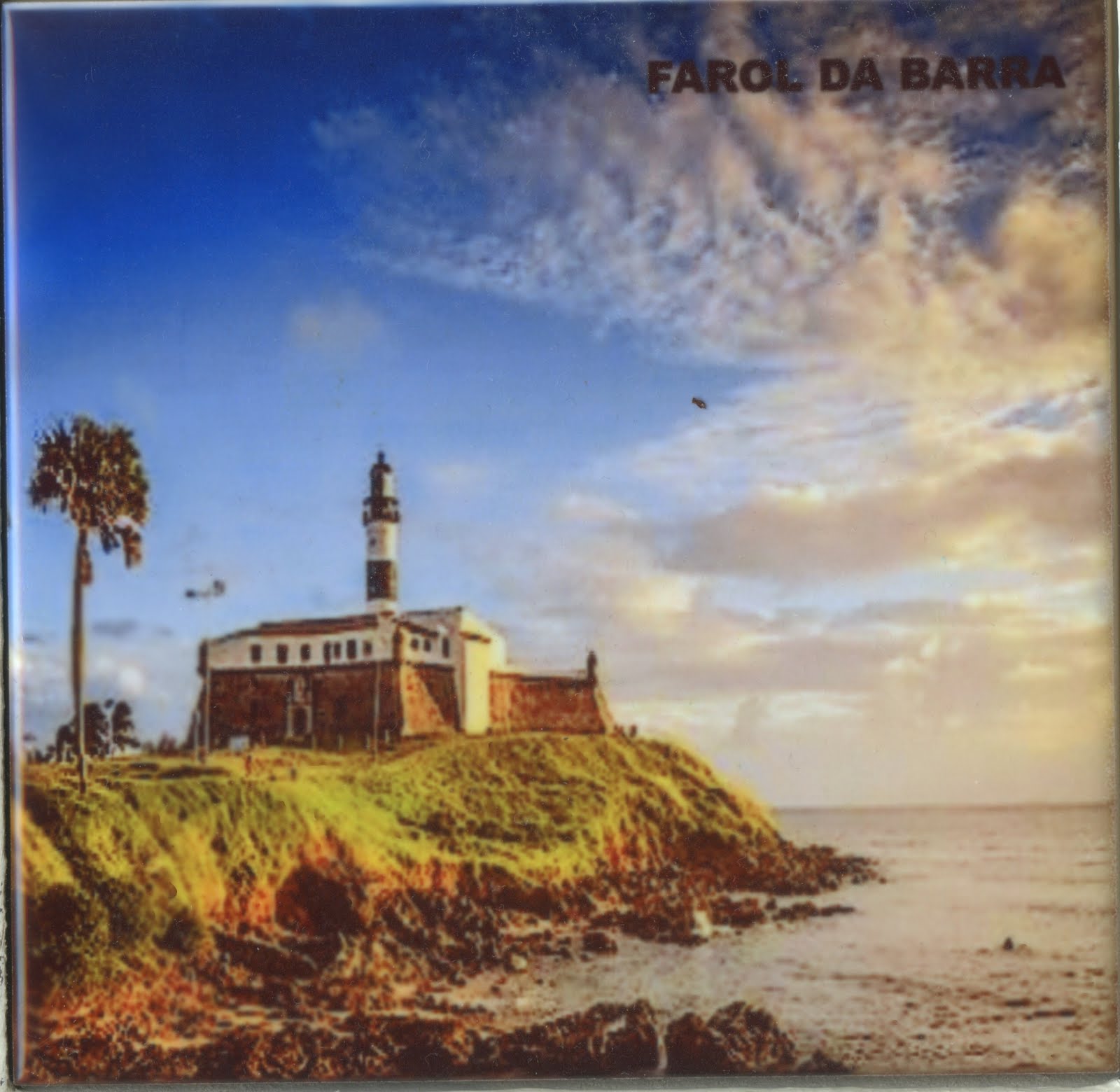
Hanging on the wall over my desk and next to my Merchant Marine license is a key ring holder.  Normally, such a pedestrian object would have no business there, but this key ring holder is special.  Furthermore, it is not there to hold keys.  A gift from Miss Patty after a recent visit with the children, it contains above the key-holding hooks a framed ceramic tile with a painting of a lighthouse on it.  While the world’s coastlines are full of lighthouses, this one serves as more than an aid to navigation.  It represents family.

In the southwest corner of Salvador, Bahia, Brazil, stands the Farol da Barra—the Lighthouse of the Barra—the Barra being the adjacent neighborhood of the city.  Situated on a slight promontory along the coast road, this light overlooks the confluence of the Atlantic Ocean and the Baia de Todos os Santos—the Bay of All the Saints.  This bay forms the seaport of Salvador.  The commercial shipping docks line the west side of the city with anchorage areas a short distance offshore.  Dating from 1698, this lighthouse has seen many vessels arrive and depart.  A comparatively new feature is the Museu Nautico da Bahia in an adjoining building.   A timeless feature is the magnificent view of the great South Atlantic Ocean, the Baia de Todos os Santos, and the adjacent coastline.  People traverse great distances to visit the Farol da Barra and enjoy the breathtaking beauty of the site.

Nearly every visit to the children in Brazil by family members from the north has included a visit to the Farol da Barra.  All of us have strolled the seaside promenade leading to the lighthouse.  The majestic sight of the seemingly limitless South Atlantic, the gentle washing of the shore along the seawall by the small waves, and the peace and quiet of Nature in contrast to the commotion of the city soothe the soul and inspire the mind.

Similar vistas are also available, even if only briefly, on one’s arrival in Salvador by air.  On its approach to the runway about a dozen miles north of the city proper, the aircraft flies over the Baia de Todos os Santos on a northeasterly heading.  To the left one sees the sheltered bay, the anchored cargo ships, and part of the commercial waterfront.  To the right one sees the open Atlantic, the Farol da Barra, and the Barra neighborhood of Salvador.  A fleeting but nonetheless breathtaking view from the air.

Five centuries ago, the Portuguese brought the supernal light of Christianity to Brazil.  They also established navigational lights to guide their ships along the coast.  Visiting this lighthouse in particular has become a family tradition, and every visit yields a spiritual experience.  In addition to illuminating the coast line, the Farol da Barra reminds us of the sublime light that our children and grandchildren bring into the family, and their light guides us to the Supreme Light that illuminates not only coast lines and families, but the entire world. 

Now for some photography.  First, the image of the Farol da Barra that's on the tile in the key ring holder:


Next are two photographs of the Farol da Barra taken by my son James on Friday, February 15, 2019:


We did have more photographs of the Farol da Barra, but unfortunately most of these were lost when my daughter's computer developed problems.  All the more reason to make a return visit, then!

Sunday, September 16, 2018

The Last Voyage


An old cliché holds that there is a first time for everything.  Less often repeated is the obvious truth that there is also a last time for everything.  I now look back on several last times.  Some examples are my last transatlantic voyage (aboard the Comet in 1983), my last transpacific voyage (also aboard the Comet, in 1984), my last voyage as a paid employee (aboard the Kane in 1986), the last time I took the license exams (in Boston in 1984), and my last visit to company headquarters in Bayonne (in 1987).

More recently, I have experienced several last times in my family life ashore.  There was the last time I rode the train from Boston to the Family Headquarters in New York to visit my parents, the last time I walked home from the Mineola station, the last time I brought flowers to my mother, the last time I showed Mom pictures of her grandchildren and great-grandchildren, the last time I bid my parents farewell when returning to New Hampshire, and so on.

We also made a last voyage.  When my now-widowed father decided to leave the old family home and relocate to an assisted living facility here in Nashua, Miss Patty and I returned to New York to get him.  On Wednesday, August 15, 2018, he made what will likely be his last voyage aboard ship.  At 12:00 noon that day the three of us along with Bradley, the dog, sailed from Orient Point, Long Island, to New London, Connecticut, aboard the Cape Henlopen.

As a young man in the 1940s, my father had sailed on troopships across the Pacific and back.  He traveled in less-than-luxurious accommodations to less-than-idyllic destinations and was happy to simply return to the United States unscathed.  In his middle years, he skippered the family sailboat Justine along the South Shore of Long Island.  More enjoyable and much safer than his treks across the Pacific, these happy times yielded many fond memories and formed the basis of my own interest in the sea.  Later, on summer vacations, he crossed the Delaware Bay several times aboard the ferries of the Delaware River and Bay Authority fleet.  Still later in life, my parents made numerous sailings on the Cross Sound fleet to visit their grandchildren in New England.  Today’s voyage aboard the Cape Henlopen would serve as a fitting capstone, perhaps a grande finale, to a long family tradition.

We boarded the Cape Henlopen about fifteen minutes prior to her scheduled departure time and ensconced ourselves in a comfortable spot with a good view on the port side promenade deck.  The meteorological conditions were perfect for making a voyage: a clear blue sky with bright sunshine, excellent visibility, a very light breeze, a mild temperature, and a calm sea.  The “beauty of the earth”[1] indeed!  My father took in the magnificent view of Gardiners Bay and the Orient Point beach with obvious delight.  At the appointed time, the whistle blew and the Cape Henlopen backed easily away from her berth and set sail for New London.

For the next hour and a half, our little family, and my father in particular, savored the gentle motion of the Cape Henlopen through the water.  As she accelerated away from the dock at Orient Point the Susan Anne arrived.  The two vessels passed starboard to starboard, and then the Susan Anne eased into the berth that the Cape Henlopen had just vacated.  Proceeding eastward, the Cape Henlopen came abeam of the Plum Gut Lighthouse and then turned to port to transit the Gut and come out onto the more open water of Long Island Sound.  The Connecticut hills stood out clearly in the distance as the Cape Henlopen now turned onto a more northeasterly heading.  Next the Jennifer C and shortly after her the Mary Ellen came into view as they sailed in the opposite direction toward Orient Point.  To the northwest, close to the Connecticut shore, the Coast Guard buoy tender Juniper[2] lay stationary as she serviced aids to navigation.

The Cape Henlopen sailed on steadily past Plum Island and across the deep blue water of the open Sound.  As she did so, we ate a light lunch and recalled that five generations of the family have now sailed on this great ship.  As we discussed this and remembered previous voyages, Bradley made friends with several of the other passengers and their dogs.  He was the first family pet to sail aboard one of the ferries, and he seemed to like it very much.

Soon the New London Harbor Light at the mouth of the Thames River came into view, and then the John H came downstream and passed the Cape Henlopen close by to port.  It was a busy day on the water!  Too quickly—and these voyages are always too short—the Cape Henlopen proceeded up the Thames and slowed for her approach to the docks in New London.  Shortly after 1:30pm, it was time for us to disembark.

This was an especially bittersweet moment.  My father had enjoyed his voyage aboard the Cape Henlopen tremendously.  But we all knew, as we continued our journey north to Nashua and the assisted living facility, that at age 96 he would in all likelihood not return to Long Island again. Thus, there would be no more voyages aboard the Cape Henlopen or any other vessel.   Shakespeare expressed it very succinctly: 

I shall no more to sea, to sea,
Here shall I die ashore.[3]

Very sad, but time had marched on, and we could not turn it back.

Happy memories of the bygone time remain, though, and some bright future still lies ahead.  Far from being isolated in a geriatric infirmary, the family patriarch now resides comfortably in a state-of-the-art facility with a home-like atmosphere close to a son, daughter-in-law, and grandson.  Furthermore, with the long range capability of the cell phone, he receives regular updates from and photographs of other grandchildren and great-grandchildren in Brazil and Alaska.  These family ties, both in person and electronic, dispel the melancholy of loneliness with the happiness of companionship, and prove the proverb, “As cold waters to a thirsty soul, so is good news from a far country” (Prov. 25:25).     

Photographs of the Cape Henlopen, her fleet mates, and landmarks along their route abound in our family’s collection.  I’m pleased to share some of them here:
 
The New London bound Cape Henlopen as seen from the Orient Point bound John H on Tuesday, June 21, 2016.  The fresh coat of paint really stands out against the gray sea and sky.
The Cape Henlopen coming up the Thames River to New London, seen from the outbound John H on a bright and sunny Wednesday, August 17, 2016.
Bradley aboard the Cape Henlopen just prior to departure from Orient Point on Wednesday, August 15, 2018.  All subsequent pictures are from this voyage.
The Plum Gut Lighthouse with Orient Point in the background.
The Orient Point bound Mary Ellen passing the Cape Henlopen port-to-port just north of Plum Island.
The Juniper servicing aids to navigation on Long Island Sound with Connecticut in the background.
New London Harbor Light at the mouth of the Thames River.
The John H leaving New London for Orient Point and passing the Cape Henlopen port-to-port.


[1] Folliott S. Pierpoint, “For the Beauty of the Earth,” in  Hymns of The Church of Jesus Christ of Latter-day Saints, Salt Lake City: The Church of Jesus Christ of Latter-day Saints, 1985, p. 92.
[2] The Juniper (WLB-201) has an interesting but sad history.  She participated in the recovery operations of Trans World Airlines flight 800 in 1998 and EgyptAir flight 990 in 1999.  Finally, she assisted in New York immediately following the terrorist attack of 2001.  See https://en.wikipedia.org/wiki/USCGC_Juniper_(WLB-201).
[3] The Tempest, II:ii:44-45.